News (engl.)
Di Salvo reflects on the past year: “I’m pleased with the resilience this team has shown”
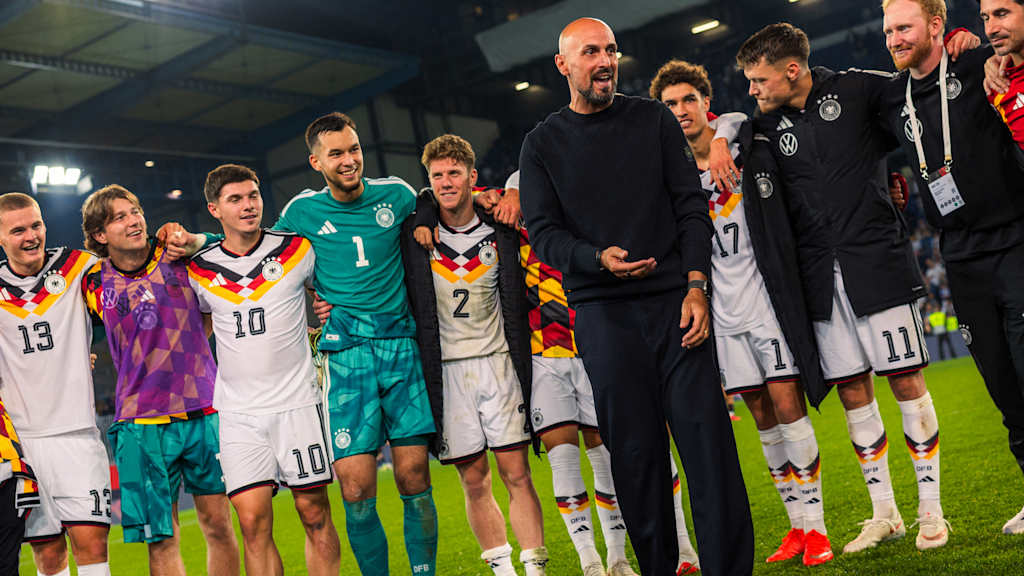
Germany U21s’ final international fixtures of the year ended in two narrow defeats against top European sides, but more importantly provided valuable insights ahead of the 2027 European Championship in Serbia and Albania. In an interview with DFB.de, head coach Antonio Di Salvo reflects on the past year and discusses his close collaboration new Germany head coach Jürgen Klopp.
DFB.de: Antonio, the rain-soaked encounter in Rijeka and the game against Belgium are now behind you. The aim in November was to see how the U21s measured up against some of Europe’s strongest sides. What conclusions have you drawn?
Antonio Di Salvo: They were friendlies, and part of the purpose of these games is to try things out. We wanted to work on specific aspects of our game, develop as a team and improve. Unfortunately, we have to disregard the second game in Croatia in that respect, as it was impossible to play football in those conditions. I can put the defeat into perspective. What frustrates me is that we weren’t able to put what we’d worked on in training into practice and address the areas we wanted to improve on.
DFB.de: And how do you feel things went against Belgium?
Di Salvo: Our focus in the first game was on our pressing, and I was very pleased with how we executed it. We were brave in stepping out to defend, put our opponents under pressure and won the ball back high up the pitch on numerous occasions. That was particularly pleasing given that we’d only had two training sessions and hadn’t even been able to train 11 against 11 due to the number of injuries, some of which occurred during the international break itself. What wasn’t right in either game, however, was the result. Football games are often decided by how clinical you are in front of goal, and that’s something we have to be critical of ourselves for. We had the better chances in both games, so we could have won them both.
DFB.de: Nevertheless, the primary objective of qualifying directly for the European Championship was achieved. How do you look back on 2026 for the U21s?
Di Salvo: Qualifying directly is the most important thing for me too. We played five European Championship qualifiers this year and won them all. Greece picked up 27 points from a possible 30, just like us, so they really made life difficult for us. They’ve now qualified for the European Championship via the play-offs, which also shows how strong our group was. After losing our first meeting with Greece at home, we constantly found ourselves having to keep pace with them, as they usually played before us. In that respect, I’m pleased with the resilience this team has shown. We also won the crucial return fixture in Athens 2-0, giving us the superior head-to-head record. We kept our composure in the final few games, so I’d say it was a very solid qualifying campaign.
DFB.de: Jürgen Klopp took over as Germany head coach on 15th August. Has that changed the way you work with the U21s?
Di Salvo: Yes! It’s great fun working with Jürgen. He’s really involved, including with the youth national teams, and he has a clear idea of how he wants his teams to play. That was one of the reasons why we focused on pressing during the last international break. Our main responsibility is to identify and develop players who have the potential to play for the senior national team as quickly as possible. Six players who had been involved in our U21 qualifying campaign featured in the crucial Nations League fixtures. We’ve already started adapting to the changes in that respect.
DFB.de: Next year’s European Championship will be the culmination of the two-year cycle. What moments along the way have particularly stuck with you?
Di Salvo: There have been several. Every cycle starts with a major overhaul of the squad, and that continues throughout the international breaks, as you can see from the number of players we’ve used. Nevertheless, we’ve once again managed to establish a particular style of play and create a good atmosphere, with the group growing closer each time we’ve got together. My coaching team and all the backroom staff deserve enormous credit for that. It’s a huge challenge every two years and can only be overcome if everyone plays their part. That’s the case here, and it’s something I really appreciate. Another milestone was that crucial win in Greece, which took us back to the top of the group. There are also little moments in other games when I can see how the team is developing, and those are really pleasing.
DFB.de: And what are you most looking forward to next year?
Di Salvo: The European Championship, without a doubt. I’ve been involved in quite a few European Championships now, and they’re always fantastic tournaments and real highlights. For now, I’m looking forward to the draw in Belgrade on 26th November, because we can start preparing in even greater detail from that point onwards. All the traditionally strong sides have qualified, and the other teams, such as Croatia and Belgium, are really tough opponents too. I’m intrigued to see how things pan out, but above all, I’m really looking forward to it.
DFB.de: How difficult is it to deal with the uncertainty over which players will be available? In November alone, you were without 23 potential call-ups – the equivalent of an entire squad.
Di Salvo: It’s not too difficult, because we still had a core group of players who have already played a lot of games for us. That core group will undoubtedly change again, but I also enjoy seeing new players get their opportunity and make the most of it. Regular playing time at club level is key. When players are getting plenty of minutes for their clubs, you generally find that there isn’t much of a drop-off in quality compared to those who are unavailable.
DFB.de: There is often a lot of talk ahead of tournaments about players understanding their roles within the squad. How important is that to you, and what in particular do you look for?
Di Salvo: That was something we addressed during this international break too. I told the players that they’d earned their call-ups, even if a lot of others were missing. I wanted to see how players stepped up and took on leadership responsibilities. How do the players who haven’t featured conduct themselves? Do they bring energy to training? Can they make an impact when they come off the bench? There are still eight months to go until the European Championship, so everyone has the opportunity to stake their claim for a place in the squad. It’s then our job to put together a squad that has everything you need for a tournament like this.
DFB.de: What are your main priorities for the remainder of this year and going into 2027?
Di Salvo: The main priority for me and my coaching team is to assess the players and stay in touch with them. Hopefully, we’ll have some difficult decisions to make when it comes to selecting the squad because so many players have been playing regularly and are in good form. Once the draw has taken place, we can get on with the next stage of our preparations, as we’ll know who we’re playing against and whether we’ll be based in Albania or Serbia. We’ll need to find a suitable base camp, choose where to hold our pre-tournament training camp and plan all the logistics. I’m looking forward to that.
DFB.de: When do you expect your squad to start taking shape?
Di Salvo: Experience tells us that it won’t be until shortly before the tournament gets underway. Of course, I have an idea of what my strongest possible squad would look like, but there are so many factors, such as injuries, that prevent you from settling on a squad any earlier. We’ll be making decisions right up until the final day again.
DFB.de: What lessons from the 2025 European Championship will feed into your preparations for EURO 2027?
Di Salvo: It’s always important to build a good team spirit, a sense of belief and excitement about the tournament. Alongside all the tactical and technical work we do in training and putting together a strong squad, it’s important to identify the players who are genuinely excited to be there. Players who see the tournament as a huge opportunity and a major event, regardless of the level they’ve already played at. Our job will be to find the right players in that respect and get our ideas across to them.
DFB.de: The game against Croatia was your 50th in charge of Germany U21s. Your first was a 3-2 win over Israel in your hometown of Paderborn in 2021. Looking back, what are your three standout moments?
Di Salvo: Your first game is always special, especially as mine happened to be in my hometown of Paderborn. It was an exciting game too, with late goals from Kevin Schade and Jonathan Burkardt securing a deserved win against a very tricky Israel side. The entire 2025 European Championship in Slovakia was a highlight, because we managed to generate a sense of belief and excitement within the team that rubbed off on the people watching us. Even though we lost the final, we had so much fun during that period and it was a fantastic experience. Thirdly, there are the moments you share with the players, such as when they make the step up to the senior national team. A recent example is Brajan Gruda, who I brought into the squad as a young player and who has now helped Germany win their Nations League group in his first two appearances for the senior team. Particularly when players are going through difficult spells, I always try to be open and honest with them, tell them what I think and where they can improve. When you then see things come together and get a little something back, whether it’s a personal thank you or simply seeing how well they’ve developed, those are the most rewarding moments.
DFB.de: You’ve been with the DFB for more than ten years now. How have you changed or adapted in that time?
Di Salvo: I’ve naturally developed as a coach. I started out as an assistant coach with the U19s, then moved up to the U21s before becoming head coach. It was a step I wanted to take and one that has been really good for me. Making decisions when the ultimate responsibility lies with you is a different matter altogether. I’ve learnt to make decisions because I genuinely believe in a particular course of action, rather than because I want to prevent or avoid something. That’s something I’ve learnt over time.
DFB.de: What have you learnt from your players in that time?
Di Salvo: That times have changed. I was a player myself, but I didn’t have to deal with anywhere near as many outside influences, largely because of how much digital technology has advanced. Everything moves at a much faster pace now, and navigating social media means constantly having to make decisions. That’s something I take into account, and my experience helps me to put things into perspective. Sometimes you need to act quickly, but it can be just as important to sleep on things.
DFB.de: As the year draws to a close, what’s on your mind on a personal level?
Di Salvo: Football is my life. For me, whether you’re a player or a coach, it’s the best job in the world, and I’m grateful for that. However, I’ve also spoken to my players and staff about how important it is to have a stable and supportive environment, with family and friends who allow you to focus on what matters with peace of mind. The end of the year is a time to give something back to those people, show them how much you appreciate their support and say thank you. That’s what I intend to do. I’m looking forward to that and to being ready for the challenges that await in the new year.
Categories: News (engl.)
Author: mmc/mh
Related news
Klopp: “Belgium are a great footballing nation”
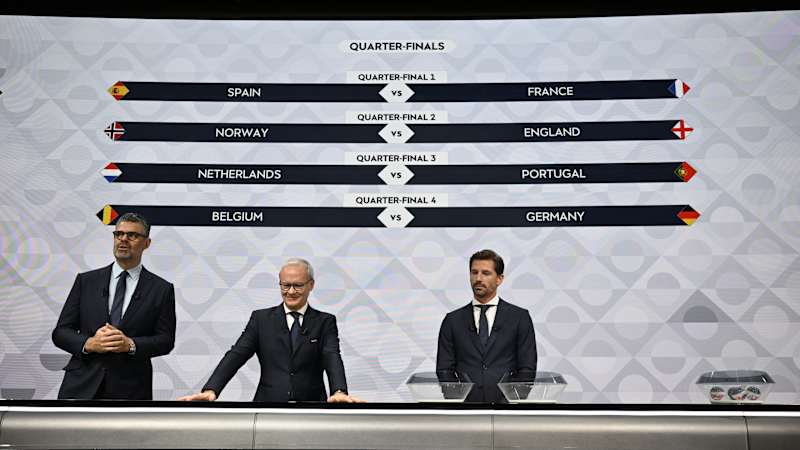
In a short interview with DFB.de, Germany head coach Jürgen Klopp shares his thoughts on drawing Belgium in the UEFA Nations League quarter-finals and discusses the potential advantage of playing the second leg at home.
Germany to face neighbours Belgium in Nations League quarter-finals
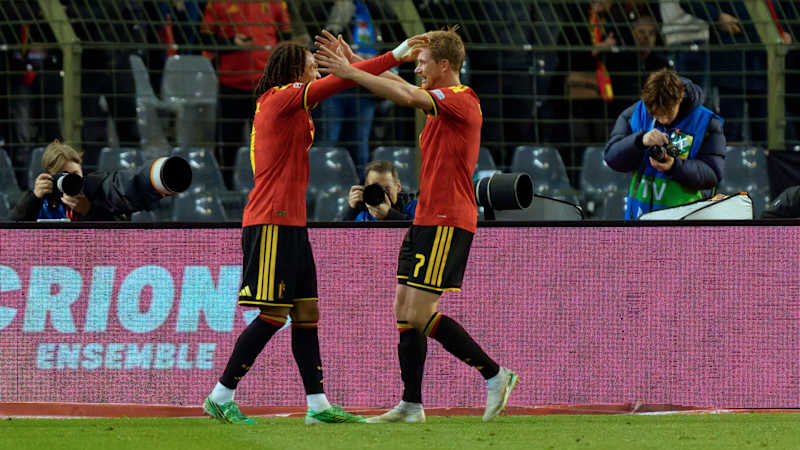
Germany will take on Belgium in the quarter-finals of the UEFA Nations League. Having topped Group A4, Germany will play the first leg away from home before hosting Belgium in the return leg a few days later.
DFB presidential board backs UEFA’s candidate Philippe Diallo for FIFA presidency
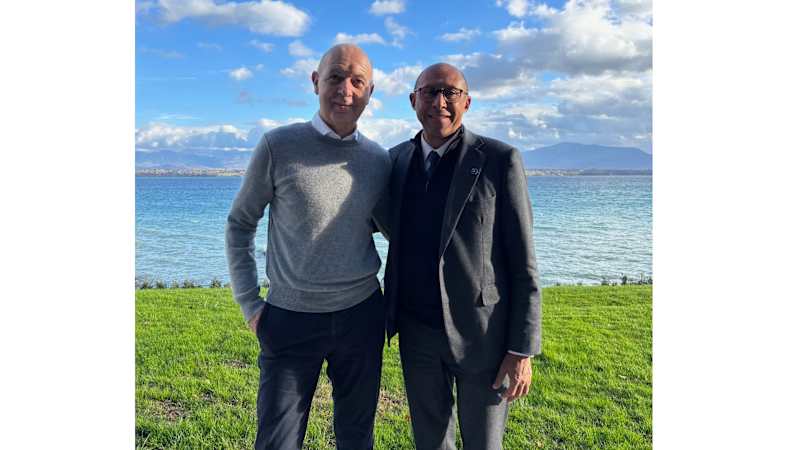
The presidential board of the German Football Association (DFB) has backed UEFA’s decision to put forward Philippe Diallo, president of the French Football Federation (FFF), as a candidate for the FIFA presidency.